Top AI Trends Transforming Business In 2026
Artificial intelligence continues to reshape industries by improving automation, decision-making, and customer experiences. Businesses across the world are investing heavily in advanced technologies to remain competitive and efficient. Understanding emerging developments helps organisations prepare for future challenges while taking advantage of opportunities created by rapidly evolving AI capabilities and digital transformation strategies.
Generative AI Expansion
Content Creation Automation
Generative AI tools are transforming content production by creating articles, images, videos, and marketing materials efficiently. Businesses use these systems to reduce production time while maintaining quality. Enhanced automation helps organisations improve creativity and deliver engaging experiences to customers across various industries.
AI-Powered Design Solutions
Modern AI platforms support graphic design, branding, and multimedia production through intelligent recommendations and automated processes. Companies benefit from faster workflows and reduced costs. These technologies help creative teams focus on strategy while maintaining consistent visual identities and professional standards effectively.
Marketing Personalisation
Businesses use generative AI to create personalised campaigns that match customer interests and preferences. Advanced algorithms analyse behaviours and deliver targeted messages. Improved relevance increases engagement, strengthens customer relationships, and supports higher conversion rates across digital marketing channels and platforms.
Product Development Assistance
AI-driven solutions accelerate product development by generating ideas, simulations, and prototypes efficiently. Organisations reduce research time and improve innovation capabilities. Businesses gain competitive advantages through faster implementation while ensuring products meet changing market demands and consumer expectations successfully.
Business Communication Enhancement
Generative AI improves emails, reports, and internal communications through intelligent writing assistance and translation features. Organisations enhance collaboration and reduce misunderstandings. Better communication strengthens productivity while supporting smoother interactions among employees, partners, and customers across global markets and industries.
AI In Customer Experience
Intelligent Chatbots
AI chatbots provide instant support and answer customer queries efficiently around the clock. Businesses improve response times and reduce operational costs. Enhanced interactions increase customer satisfaction while ensuring users receive accurate information and personalised assistance whenever required for their needs.
Voice Assistants Integration
Companies integrate voice technologies into customer service systems to deliver faster and more natural interactions. AI-powered assistants understand requests and provide relevant responses. These capabilities improve accessibility while strengthening relationships between businesses and consumers across multiple communication channels.
Predictive Customer Support
Predictive analytics helps organisations identify issues before customers experience difficulties. AI systems analyse behaviours and recommend proactive solutions. Businesses improve satisfaction and loyalty while reducing complaints, creating stronger relationships and maintaining higher service standards consistently over time.
Personalised Recommendations
AI recommendation engines analyse preferences and purchase histories to suggest suitable products and services. Businesses enhance shopping experiences while increasing sales opportunities. Personalisation strengthens customer engagement and supports better decision-making across e-commerce, entertainment, and retail industries worldwide.
Sentiment Analysis Tools
Sentiment analysis technologies evaluate customer opinions from reviews, surveys, and social media conversations. Businesses understand emotions and improve strategies accordingly. These insights strengthen brand reputation while helping organisations respond effectively to changing expectations and market trends successfully.
| AI Trend | Main Benefit | Industries |
|---|---|---|
| Generative AI | Content Automation | Marketing |
| Predictive Analytics | Better Decisions | Finance |
| AI Cybersecurity | Threat Detection | IT |
| AI Assistants | Customer Support | Retail |
| Autonomous Systems | Efficiency | Manufacturing |
AI-Driven Automation
Workflow Optimisation
AI technologies automate repetitive processes and improve operational efficiency throughout organisations. Businesses reduce manual workloads while increasing accuracy and consistency. Streamlined workflows support productivity and allow employees to focus on strategic responsibilities that contribute to growth and innovation.
Robotic Process Automation
Robotic process automation simplifies administrative tasks such as data entry, invoicing, and reporting activities. Organisations save time and minimise errors through intelligent systems. Improved efficiency strengthens performance while supporting scalable operations and cost-effective business processes across industries.
Supply Chain Automation
AI-powered supply chain solutions enhance inventory management and demand forecasting capabilities. Businesses optimise logistics while reducing waste and delays. Greater visibility improves decision-making and supports stronger operational performance across manufacturing, retail, and distribution networks worldwide successfully.
Human Resource Management
Artificial intelligence supports recruitment, employee engagement, and workforce analytics through intelligent tools and automation. Companies streamline hiring processes while improving talent management strategies. Enhanced efficiency helps organisations attract skilled professionals and maintain productive workplace environments consistently.
Financial Operations Improvement
AI systems automate accounting processes, fraud detection, and financial reporting with greater precision. Businesses gain faster insights and reduce operational risks. Improved efficiency strengthens decision-making while supporting sustainable growth and compliance with evolving financial regulations and standards.
Predictive Analytics Growth
Data-Driven Decisions
Predictive analytics enables businesses to identify patterns and forecast outcomes accurately. Organisations use insights to improve planning and reduce uncertainties. Better information supports strategic decisions while helping companies remain competitive in rapidly changing markets and economic environments.
Sales Forecasting
AI-driven forecasting tools analyse historical trends and customer behaviours to predict future sales opportunities. Businesses allocate resources effectively and optimise strategies. Accurate forecasts improve profitability while supporting stronger planning and sustainable business growth across competitive industries successfully.
Risk Management
Predictive technologies identify potential risks before they become major problems. Businesses strengthen resilience through proactive planning and data analysis. Early detection improves stability while reducing disruptions that could negatively affect operations, reputation, and long-term profitability objectives.
Market Trend Analysis
AI systems analyse consumer behaviours and market developments to reveal valuable insights. Businesses adapt strategies according to emerging opportunities and challenges. Improved understanding strengthens competitiveness while supporting innovation and effective positioning across evolving industries and customer segments.
Demand Forecasting
Demand forecasting tools help organisations manage inventory levels and production schedules efficiently. Businesses avoid shortages and unnecessary expenses through better planning. Accurate predictions improve customer satisfaction while supporting cost-effective operations and stronger supply chain performance consistently.
AI Cybersecurity Solutions
Threat Detection Systems
AI-powered security solutions monitor networks continuously and identify suspicious activities quickly. Businesses reduce vulnerabilities and strengthen protection against cyberattacks. Advanced monitoring improves reliability while ensuring sensitive information remains secure across digital environments and technological infrastructures effectively.
Fraud Prevention Tools
Artificial intelligence helps detect unusual transactions and prevent financial fraud efficiently. Organisations improve security while minimising losses and operational risks. Stronger protection enhances trust among customers and stakeholders while supporting safer digital interactions and business activities.
Automated Incident Response
AI systems respond to cyber threats rapidly by isolating risks and minimising damage. Businesses improve resilience and maintain operational continuity. Faster responses reduce downtime while ensuring organisations recover efficiently from security incidents and technological disruptions successfully.
Identity Verification
Advanced AI technologies strengthen authentication processes through facial recognition and behavioural analysis. Businesses improve access control and reduce security breaches. Enhanced verification systems support safer digital environments while protecting users and confidential information from unauthorised activities.
Cloud Security Management
AI-driven security platforms safeguard cloud infrastructures through intelligent monitoring and risk analysis. Businesses strengthen protection while ensuring compliance with regulations. Improved visibility supports reliable operations and minimises vulnerabilities associated with digital transformation initiatives and online services.
Autonomous Systems Adoption
Smart Manufacturing
Manufacturers increasingly use AI-powered machines to improve efficiency and product quality. Automated systems reduce downtime while enhancing production accuracy. Businesses benefit from lower costs and stronger competitiveness through intelligent operations and advanced industrial technologies worldwide successfully.
Self-Service Technologies
Retail and service industries adopt autonomous systems to simplify transactions and improve customer convenience. AI-powered kiosks and automated services reduce waiting times. Enhanced experiences strengthen satisfaction while supporting operational efficiency and business growth across competitive markets.
Logistics Innovation
AI technologies optimise transportation routes and warehouse operations through autonomous solutions. Businesses reduce delivery times and improve resource management. Greater efficiency supports customer satisfaction while strengthening supply chains and enhancing profitability across logistics and distribution industries.
Smart Healthcare Applications
Healthcare providers implement autonomous technologies for diagnostics, monitoring, and patient support services. AI improves accuracy and operational efficiency significantly. Better healthcare outcomes strengthen patient experiences while supporting innovation and reducing pressures on medical professionals and institutions.
Retail Automation
Retailers adopt AI-driven automation to improve inventory management, checkout experiences, and customer engagement strategies. Intelligent systems enhance efficiency and reduce operational expenses. Businesses strengthen competitiveness while delivering seamless shopping experiences that meet evolving consumer expectations successfully.
Responsible AI Development
Ethical AI Practices
Businesses increasingly prioritise ethical frameworks to ensure responsible AI implementation. Transparency and accountability strengthen trust among customers and stakeholders. Clear policies support sustainable innovation while reducing concerns surrounding bias, privacy, and misuse of intelligent technologies.
Regulatory Compliance
Governments continue introducing regulations that influence AI development and deployment practices. Organisations adapt strategies to meet legal requirements effectively. Compliance improves credibility while helping businesses avoid penalties and maintain responsible operations across international markets successfully.
Data Privacy Protection
Protecting customer information remains a priority as AI adoption expands globally. Businesses implement secure practices and encryption technologies to safeguard sensitive data. Strong privacy measures strengthen trust while ensuring compliance with evolving standards and consumer expectations.
Bias Reduction Strategies
Organisations invest in techniques that minimise bias and improve fairness within AI systems. Balanced algorithms support accurate decisions and ethical outcomes. Responsible approaches enhance credibility while ensuring technologies serve diverse communities and business objectives effectively.
Transparent Decision Systems
Transparent AI models help organisations explain automated decisions clearly to users and regulators. Improved visibility strengthens accountability and trust. Businesses benefit from responsible innovation while supporting confidence in intelligent technologies and maintaining positive customer relationships consistently.
What are the biggest AI trends transforming businesses in 2026?
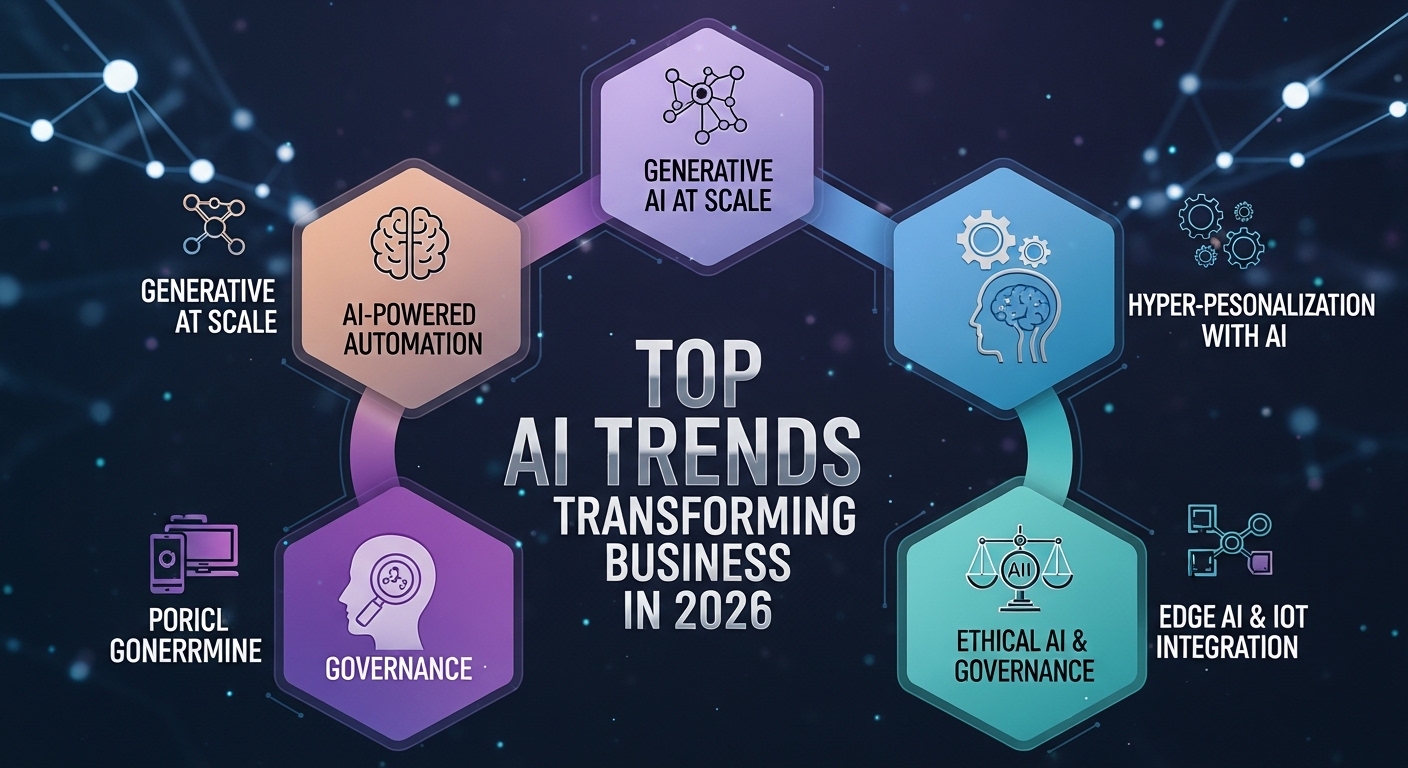
Generative AI, predictive analytics, automation, cybersecurity, and autonomous systems are leading trends.
Why is AI important for businesses in 2026?
AI improves efficiency, customer experiences, and strategic decision-making across industries.
How does generative AI help companies?
Generative AI supports content creation, communication, design, and product development processes.
Can AI improve cybersecurity?
Yes, AI strengthens threat detection, fraud prevention, and incident response capabilities.
Is responsible AI becoming important?
Yes, ethical practices and regulatory compliance are becoming major priorities worldwide.
Conclusion
Top AI trends transforming business in 2026 are reshaping operations, customer experiences, and decision-making processes. From automation and predictive analytics to cybersecurity and responsible development, artificial intelligence continues driving innovation. Businesses that embrace these technologies strategically will strengthen competitiveness, improve efficiency, and position themselves successfully for future growth and evolving market demands.